Prefabricated Small Homes offer a smart, stylish solution for modern living. Designed and built off-site with precision engineering, each home arrives ready for fast installation, minimizing disruption and reducing construction timelines. High-quality materials, energy-efficient insulation, and airtight construction deliver year-round comfort while lowering utility costs. Thoughtful layouts maximize every square foot, blending open living areas with clever storage and flexible spaces for work or relaxation. Choose from customizable finishes, rooflines, and floor plans to match your lifestyle or site requirements. Durable, low-maintenance exteriors stand up to diverse climates, making these homes ideal for backyard additions, vacation retreats, or primary residences. With predictable pricing and consistent quality control, prefabricated small homes remove the uncertainty of traditional builds. Whether you’re downsizing, investing, or expanding, enjoy contemporary design, sustainability, and speed—without sacrificing comfort or character. Expert support guides permitting, delivery, and setup, ensuring a seamless experience from planning to move-in for every buyer.
Prefabricated small homes (also called prefab tiny homes, modular microhomes, or factory-built small dwellings) are complete living units manufactured off-site in a controlled factory environment and delivered to a site where they’re installed, connected and finished. Over the last decade they’ve become a mainstream option for affordable housing, vacation rentals, remote workspaces, emergency shelters and “granny flats.”
Product overview & summary
Prefabricated small homes are engineered as compact, highly efficient residential units. They combine industrial manufacturing precision with residential-grade finishes. Typical footprints range from 10–40 m² (110–430 ft²) for single-module units; multi-module combinations can produce larger floor areas. Because key components are built in a factory, prefab small homes deliver predictable quality, faster lead times, and easier scalability than fully site-built homes.
Product features & uses
Core features
- Factory-built modules: Walls, floors, roof, and often furniture and utilities preassembled in a climate-controlled factory.
- Rapid deployment: Reduced on-site labor and construction time (days to a few weeks depending on site work).
- High-quality, repeatable build: Controlled conditions yield consistent tolerances and finishes.
- Energy efficiency: Tight building envelope, high-performance insulation, and options for high-efficiency windows and HVAC.
- Customizable interiors: Kitchenettes, bathrooms, storage systems, built-in furniture and finishes can be selected from options.
- Transportable or permanent: Designed either for relocation (on chassis or skids) or permanent siting on foundations or piers.
- Plug-and-play utilities: Pre-routed plumbing, electrical, and HVAC with on-site connection points for fast hookup.
- Sustainable options: Use of recycled materials, low-VOC finishes, solar-ready roofs, composting toilets and greywater recovery.
Typical uses
- Primary residence (single or clustered units)
- Accessory dwelling units (ADUs) / granny flats
- Vacation rentals / short-term stay cabins
- Office / work-from-home studios
- Student housing pods
- Emergency/disaster housing and shelters
- Remote workforce accommodations (mining, forestry, research stations)
- Retail pop-ups, kiosks, and site offices
- Healthcare clinics and temporary medical units
Product characteristics
Construction & materials
- Structure: Steel or timber frame (light-gauge steel, engineered timber). Choice impacts weight, transportability, and thermal bridging.
- Envelope: SIPs (structural insulated panels), insulated stud walls, or cold-formed steel panels. Exterior cladding options: fiber cement, metal, wood, composite panels.
- Roofing: Standing seam metal, composite shingles, or membrane roofing (EPDM/TPO) for flat/low-slope units.
- Flooring: Plywood/OSB subfloor with finishes such as vinyl plank, engineered wood, laminate, or tile.
- Windows/doors: Double- or triple-glazed windows; insulated exterior doors with weatherstripping.
- Interiors: Prefinished wall panels, moisture-resistant bathroom modules, built-in cabinets and multifunctional furniture.
Performance & durability
- Thermal: Typical U-values and R-values vary by design; high-efficiency models target R-20–R-40 walls and R-30–R-60 roofs (region-dependent).
- Airtightness: Factory assembly enables good air tightness; target blower-door results often <5 ACH50 for standard builds, and <3 ACH50 for high-performance units (passive-like designs can be tighter).
- Acoustic: Insulation, separation layers and sealed joints reduce airborne noise; optional acoustic upgrades available.
- Load capacity: Engineered for shipping and on-site loads; floor live-loads typically designed to 1.5–2.0 kN/m² (approx. 30–40 psf) depending on code and use.
- Seismic & wind resistance: Modules engineered to comply with local seismic and wind load standards (can be rated to regional codes for hurricane or seismic zones).
- Lifespan: Properly maintained prefab homes can last 50+ years; materials and systems determine lifecycle and replacement intervals.
Product specifications & typical parameters
The numbers below are representative ranges for small prefabricated homes. Specific models vary by manufacturer and local code requirements.
| Parameter |
Typical range / value |
Notes |
| Footprint (single module) |
10–40 m² (110–430 ft²) |
Common sizes: 3×6 m, 3×8 m, 3.6×8 m |
| Ceiling height |
2.1–2.6 m (7–8.5 ft) |
Lofted designs may have variable heights |
| Weight (unit) |
2,000–8,000 kg (4,400–17,600 lb) |
Heavier with steel frames and finishes |
| Wall insulation (R-value) |
R-10 to R-30 (or equivalent U 0.1–0.4 W/m²K) |
Climate-dependent |
| Roof insulation (R-value) |
R-20 to R-60 |
For cold climates higher R is typical |
| Window glazing |
Double or triple glazed |
Low-e coatings available |
| HVAC |
Mini-split heat pump, ducted heat pump, electric baseboard, or gas furnace |
Mini-splits common for compact units |
| Electrical service |
16 A – 60 A single-phase typical; 100–200 A for multi-unit installations |
Prewired to junction box |
| Water supply |
1/2″ – 3/4″ inlet |
Pre-routed supply lines |
| Waste plumbing |
2″ – 4″ waste mains |
Connection point for sewer or septic |
| Transport method |
Flatbed truck, tilt-bed, or on-chassis |
May require permits for oversize loads |
| Wind rating |
Up to code-specific (e.g., 120–200+ km/h) |
Engineered for local requirements |
| Seismic rating |
Engineered per site |
Bracing and anchor systems included |
| Fire rating |
Exterior claddings and interior finishes per code |
Sprinkler options for multi-unit installations |
| Lead time |
4–16 weeks typical |
Dependent on customization and factory backlog |
| Warranty |
1–10 years |
Varies for structure, system components and finishes |
Product instructions (installation, operation & maintenance)
Pre-delivery & site prep
- Site survey & permits: Confirm zoning, building codes, and required permits (foundation, electrical, plumbing, transport).
- Access & logistics planning: Verify road access for delivery vehicle, overhead clearances, and turning radius. Obtain transport permits for oversize loads if needed.
- Foundation & utilities: Prepare concrete slab, piers, or screw piles per manufacturer foundation plan. Install electrical service, water and sanitary stub-outs to the connection points.
- Crane & delivery staging: Arrange crane or other lifting equipment sized to the unit weight and local regulations.
Delivery & installation
- Offload safely: Use certified lifting points and follow manufacturer lift plan.
- Set and anchor: Place module on foundation, level unit, and anchor per engineering specs (wind and seismic anchors).
- Sealing & flashing: Complete exterior sealing between modules and flash roof/wall junctions to ensure weather-tightness.
- Utility hookup: Connect electrical, water, and waste lines. Pressure-test plumbing and commission electrical circuits.
- Interior finish & commissioning: Install trim, connect appliances, test HVAC, and verify smoke/CO detectors and ventilation.
Operation & maintenance
- Daily/weekly: Keep vents clear; operate mechanical systems per manufacturer guidance.
- Monthly: Check seals around windows/doors and inspect roof drains.
- Annually: Service HVAC (filters, refrigerant levels), test smoke/CO detectors, inspect roof for damage, re-caulk exterior joints as needed.
- Long-term (5–15 years): Replace HVAC components, update appliances, reseal exterior coatings, inspect structural elements for moisture.
Safety & regulatory points
- Anchoring is crucial in high-wind or seismic regions — lack of proper anchors can lead to catastrophic failure.
- Fire safety: Install code-compliant smoke alarms and escape windows where required.
- Ventilation: Ensure adequate ventilation to avoid moisture buildup and indoor air quality issues in tightly sealed units.
- Transport safety: Follow transport restrictions, use certified carriers, and comply with oversize/overweight permits.
Customization & optional add-ons
- Lofts & mezzanines to increase sleeping area.
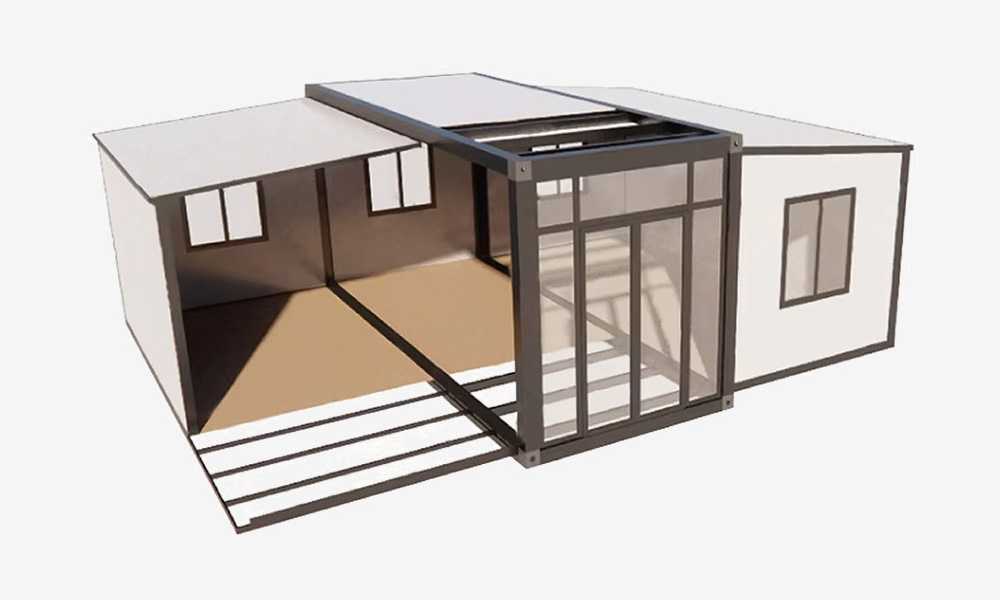
- Expandable modules (telescoping or folding sections) to increase usable floor area after siting.
- Solar PV + battery + inverter packages for off-grid or net-zero operation.
- Greywater systems, composting toilets, rainwater harvesting for low-water or remote sites.
- Smart-home integration: Wi-Fi thermostats, lighting systems, remote monitoring.
- Accessibility packages: Wider doors, ramp-ready thresholds, roll-in showers.
- High-end finishes: Hardwood, stone countertops, premium appliances.
- Exterior decks, canopies, and connectors to create clusters or campus-style arrangements.
Applicable industries
- Residential real estate — infill ADUs, affordable housing developments, multi-unit micro-dwellings.
- Hospitality & tourism — glamping pods, cabin rentals, eco-lodges.
- Construction & contracting — site offices, sales suites, temporary workforce housing.
- Disaster response & humanitarian aid — emergency shelters, transitional housing.
- Healthcare & social services — small clinics, counseling rooms, quarantine units.
- Education — dorm pods, temporary classrooms, campus micro-housing.
- Retail & commercial — pop-up shops, kiosks, mobile offices.
- Energy & resource sectors — remote camp accommodations for field crews.
- Events & exhibitions — ticket booths, backstage dressing rooms, hospitality suites.
Target customer groups
- First-time and budget-conscious homeowners seeking affordable entry into homeownership.
- Urban homeowners who want ADUs for rental income, multigenerational living or home offices.
- Developers & builders looking for repeatable units to scale small-footprint housing projects.
- Investors / short-term rental operators aiming to deploy turnkey vacation units on remote or scenic plots.
- Municipalities & non-profits pursuing rapid affordable housing or supportive housing solutions.
- Disaster relief organizations requiring fast-deploy shelters.
- Small businesses & event organizers needing quick-install retail or office space.
- Remote employers paying for workforce housing (mining, oil & gas, research).
- Eco-conscious consumers wanting low-impact, energy-efficient dwellings.
Use this checklist when evaluating prefab small homes:
- Local code compliance: Does the unit meet local building, electrical, plumbing and zoning rules? Are there ADU rules or minimum size limits?
- Transport & access: Can the unit be delivered to your site? What permits, escort vehicles or road upgrades are required?
- Foundation & site cost: Foundation type, site grading, driveway and utility connection costs can rival the unit price.
- Warranty & after-sales service: What’s covered (structure, waterproofing, MEP systems) and for how long? Is there local service?
- Thermal and acoustic performance: Confirm insulation values, glazing specs and blower-door or lab-tested performance if important.
- Customization lead times & costs: How much customization is possible before driving up lead time and price?
- Resale & financing: Can you get mortgage financing or is it limited to personal loans? How will it appear on property records?
- Lifecycle costs: Expect to evaluate operating expenses (heating/cooling) and replacement timelines for appliances and finishes.
Pros & cons (quick summary)
Pros
- Faster, high-quality construction and predictable costs.
- Scalability and repeatability for multi-unit projects.
- Reduced weather delays and better quality control.
- Opportunities for energy-efficient, low-carbon design.
Cons
- Site access and transport can be costly and complicated.
- Local codes and permitting vary widely; approvals can take time.
- Customization beyond offered options may be expensive.
- Perception or financing limitations in some markets.
Prefabricated small homes offer a flexible, efficient, and increasingly mainstream option for a wide range of residential and commercial needs. They bring factory precision and speed to housing, while allowing customization, energy-efficiency upgrades, and modular scalability. Whether used as a permanent tiny home, an ADU to increase property value, or as rapid-response housing for emergencies, prefab small homes are a practical tool in today’s toolbox for addressing affordability, sustainability and rapid deployment needs.
Contact Us
We’d love to hear from you! Whether you have questions about our products, need assistance with your order, or simply want to share feedback, our team is here to help.
Address: No. 5888, Wuyuan Road, Wuyuan Street, Haiyan County, Jiaxing, Zhejiang
Phone: +86-0573-86598806
Email: sales@fsilon.com
Website: Prefabricated Small Homes
Or simply fill out our contact form on the website, and we’ll get back to you within 24 hours.